Ganesh Chaturthi: Meaning, Significance, History, Rituals & Spiritual Importance
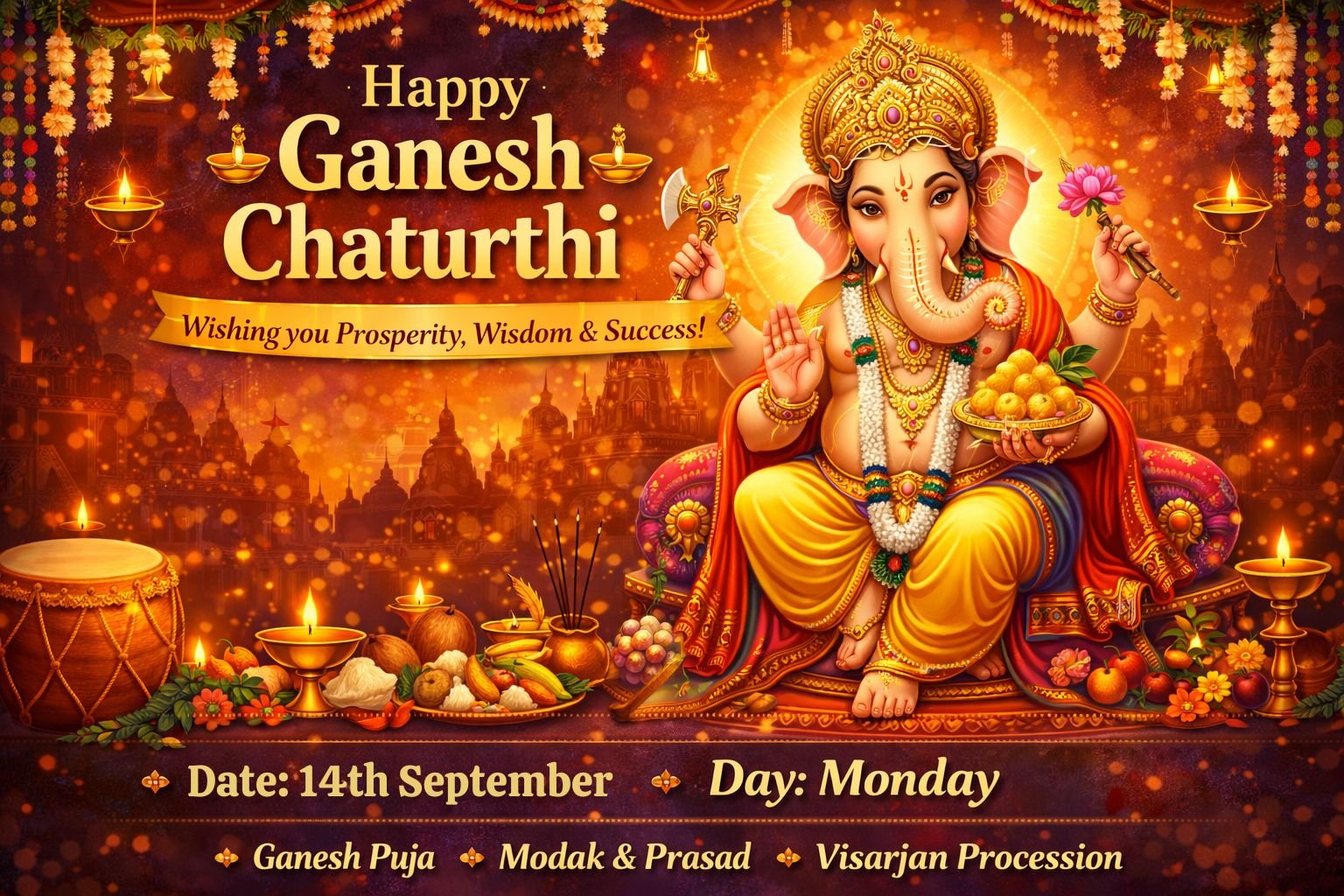
Ganesh Chaturthi, also known as Vinayaka Chaturthi or Ganeshotsav, is one of the most celebrated Hindu festivals dedicated to Lord Ganesha, the remover of obstacles and the god of wisdom, prosperity, and new beginnings. Every year, millions of devotees across India and around the world welcome Lord Ganesha into their homes and temples with immense devotion, joy, and enthusiasm.
From the arrival of beautifully crafted Ganesha idols to the powerful chanting of “Ganpati Bappa Morya,” the festival brings communities together in celebration, faith, and cultural unity.
In this detailed 2000+ word blog, we will explore:
- What is Ganesh Chaturthi
- The mythological origins of the festival
- The significance of Lord Ganesha
- Rituals, puja vidhi, and celebrations
- The spiritual importance of Ganesh Visarjan
- Modern-day celebrations across India
- Environmental awareness in idol immersion
- Mantras, bhajans, and fasting practices
🕉 1. What Is Ganesh Chaturthi?
Ganesh Chaturthi is a Hindu festival celebrating the birth of Lord Ganesha, the beloved elephant-headed deity. The festival falls in the Hindu month of Bhadrapada, usually between August and September.
The celebration lasts 1.5, 3, 5, 7, 9, or 11 days, depending on the tradition followed by the family or community.
Ganesh Chaturthi is not just a religious festival — it is a cultural, spiritual, and deeply emotional event representing:
- New beginnings
- Removal of obstacles
- Collective harmony
- Gratitude toward nature
- Celebration of art and devotion
🕉 2. Mythological Origin of Ganesh Chaturthi
The story of Ganesha’s birth is described in various texts, with the most popular version from the Shiva Purana:
✔️ The Story of Ganesha’s Birth
Once, Goddess Parvati created a boy out of turmeric paste and breathed life into him. She instructed him to guard the entrance while she bathed.
When Lord Shiva returned, the boy refused to let him enter. Not knowing who he was, Shiva became furious and a battle ensued. In anger, Shiva severed the boy’s head.
Parvati was heartbroken and demanded that Shiva restore her son. Shiva instructed his followers to bring the head of the first creature they found — an elephant. Ganesha was brought back to life with the elephant head, becoming the beloved child of Shiva and Parvati.
Thus came the name Ganapati — the Lord of the Ganas.
🕉 3. Why Is Lord Ganesha Worshipped First?
Lord Ganesha is known as:
- Vighnaharta (remover of obstacles)
- Budhhi-pradata (giver of wisdom)
- Siddhi Vinayaka (bestower of success)
- Mangalmurti (symbol of auspiciousness)
According to the Puranas, Ganesha was blessed by Lord Shiva that:
“Before beginning any new task, puja, journey, or ritual, my son Ganesha shall be worshipped first.”
Therefore, Ganesh Chaturthi marks the perfect time to begin new ventures, pray for clarity, and remove negative energies.
🕉 4. Significance of Each Symbol of Lord Ganesha
Lord Ganesha’s visual form carries deep spiritual meanings:
✔️ Elephant Head
Symbolizes intelligence, wisdom, and the ability to see beyond the obvious.
✔️ Big Ears
Represents listening ability and a reminder to absorb knowledge.
✔️ Small Eyes
Encourages focus and concentration.
✔️ Broken Tusk
Represents sacrifice and survival — used by Ganesha to write the epic Mahabharata.
✔️ Trunk
Symbolizes adaptability and strength.
✔️ Mouse (Mushak)
Denotes overcoming ego.
✔️ Modaks
Symbol of inner bliss and spiritual rewards.
🕉 5. How Ganesh Chaturthi Is Celebrated
Ganesh Chaturthi celebrations include:
- Bringing home the idol
- Pranapratishtha (invoking life into the idol)
- Daily puja
- Aarti and bhajans
- Prasad distribution
- Cultural programs
- Community feasts
- Ganesh Visarjan procession
✔️ Placing the Idol
The idol is placed on a decorated platform with:
- Flowers
- Torans
- Lights
- Rangoli
- Fruits and sweets
✔️ Pranapratishtha Puja
Priests or family members chant Vedic mantras to invite Ganesha into the idol.
✔️ Daily Rituals
Each day devotees perform:
- Ganesh aarti (Sukhakarta Dukhaharta, Jai Ganesh Deva)
- Modak and ladoo offerings
- Flowers and durva grass
- Lighting lamps and incense
🕉 6. Importance of Ganesh Visarjan
On the last day, the idol is immersed in water with chants of:
“Ganpati Bappa Morya, Pudhchya Varshi Lavkar Ya!”
This symbolizes:
- The cycle of creation and dissolution
- Letting go of attachments
- Returning to the source (nature)
- Renewal of life and energy
The visarjan is a powerful spiritual practice of surrender and faith.
🕉 7. Ganesh Chaturthi in Different Parts of India
Though celebrated everywhere, certain regions add unique cultural flavors.
✔️ Maharashtra
The heart of Ganeshotsav — gigantic pandals, cultural events, dhol-tasha, and massive visarjan processions.
✔️ Goa & Konkan
Homes follow ancient traditions with clay idols and local rituals.
✔️ Karnataka
Special pujas in temples and community celebrations.
✔️ Tamil Nadu & Andhra Pradesh
Known as Vinayaka Chavithi, celebrated with traditional Vedic rituals.
✔️ North India
Homes observe fasts and offer laddoos, flowers, and prayers.
✔️ Worldwide
From the USA to the UK, Singapore to Mauritius — Indian communities celebrate Ganesh Chaturthi with equal devotion.
🕉 8. Eco-Friendly Ganesh Chaturthi
With increasing environmental awareness, devotees now choose:
- Clay idols
- Paper-mache idols
- Natural colors
- Artificial tanks for visarjan
- Reusable metal idols
The aim is to protect rivers, lakes, and marine life.
🕉 9. Mantras, Aartis & Bhajans
Popular chants during the festival:
✔️ Ganesh Mantra
“Om Gan Ganapataye Namaha”
✔️ Aarti
“Sukhakarta Dukhaharta Varta Vighnachi”
✔️ Bhajans
Devotional songs praising Lord Ganesha to invoke happiness and blessings.
🕉 10. Spiritual Benefits of Celebrating Ganesh Chaturthi
- Removes obstacles
- Brings prosperity and clarity
- Strengthens family unity
- Purifies the mind
- Enhances devotion and inner joy
- Teaches surrender and acceptance
- Encourages sustainable living
Ganesh Chaturthi is ultimately a celebration of faith, devotion, wisdom, and renewal.
🕉 11. Conclusion
Ganesh Chaturthi is not merely a festival — it is a spiritual journey that begins with the arrival of Lord Ganesha and ends with the profound practice of letting go during Visarjan. It inspires devotees with the values of humility, wisdom, patience, and gratitude.
As we chant “Ganpati Bappa Morya,” we invite peace, harmony, and prosperity into our lives.
May Lord Ganesha bless everyone with success, happiness, and strength.