

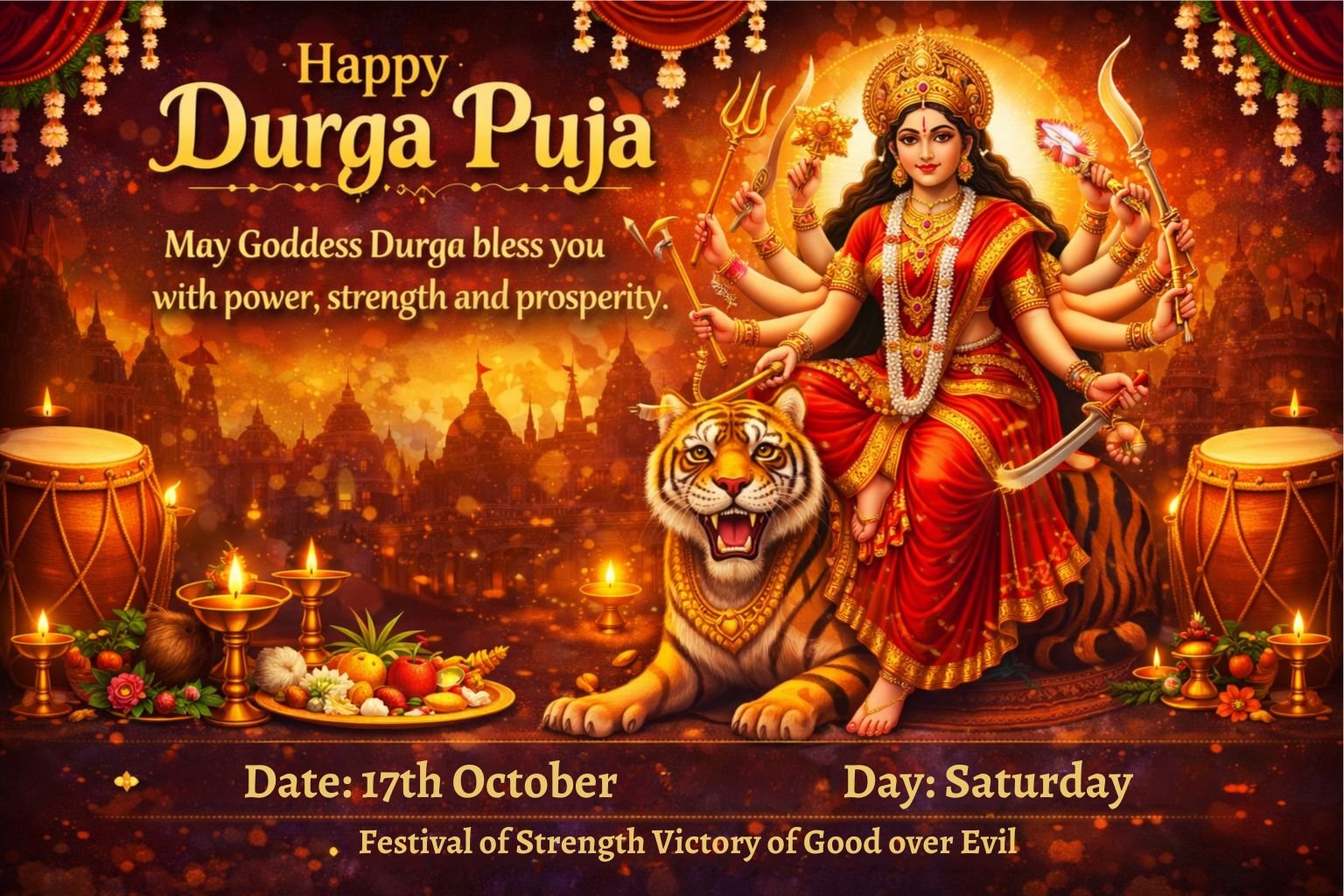
Durga Puja: History, Significance, Rituals & Cultural Importance
Durga Puja, also known as Sharodotsav, is one of the grandest and most celebrated festivals in India. Dedicated to Goddess Durga, it symbolizes the victory of good over evil, devotion over ego, and light over darkness. Celebrated with breathtaking pandals, vibrant processions, heartfelt devotional rituals, and a deep sense of community, Durga Puja stands as a cultural masterpiece blending spirituality, art, faith, and tradition.
Observed primarily in West Bengal, Assam, Odisha, Tripura, and Bangladesh, Durga Puja has now become a global festival celebrated by Bengali communities worldwide. Beyond its religious significance, it is also a celebration of feminine energy, cultural identity, artistic brilliance, and social harmony.
In this in-depth 2000+ word blog, we will explore:
- What is Durga Puja?
- The mythology behind the festival
- Why Goddess Durga is worshipped
- Rituals and celebrations
- Importance of each day (Mahalaya to Vijayadashami)
- Artistic and cultural significance
- Global celebrations
- Eco-friendly puja initiatives
- Devotional mantras, aartis, and prayers
🕉 1. What Is Durga Puja?
Durga Puja is a 10-day festival that celebrates the arrival of Goddess Durga from Mount Kailash to her maternal home on Earth, symbolizing love, power, and protection. It usually falls in the Hindu month of Ashwin (September–October).
The last five days — Shashthi, Saptami, Ashtami, Navami, and Vijayadashami — are the main days of worship, marked by rituals, cultural performances, dhoop dhuna, dhak beats, and elaborate pandals.
Durga Puja represents:
- The triumph of righteousness
- Devotion to the Divine Mother
- The power of feminine energy (Shakti)
- Renewal of faith and celebration
- Community bonding and togetherness
🕉 2. The Mythology Behind Durga Puja
Durga Puja is rooted in the epic story of Mahishasura, a shape-shifting demon who terrorized heaven and Earth. No god alone could defeat him, so the divine powers of Brahma, Vishnu, and Shiva combined to create a powerful goddess — Maa Durga.
Armed with celestial weapons, Durga fought Mahishasura for nine days and nights and defeated him on the tenth day, symbolizing:
“Good triumphs over evil, always.”
This victory is celebrated as Durga Puja and Vijayadashami (Dussehra).
🕉 3. Why Goddess Durga Is Worshipped
Goddess Durga represents:
- Shakti — the supreme cosmic energy
- Protection, strength, and fearlessness
- Purification of negative forces
- Divine motherhood
- The annihilation of ego and ignorance
She is depicted with:
- Ten arms, holding powerful celestial weapons
- A lion, symbolizing courage
- Slaying Mahishasura, representing victory over inner demons
Devotees worship her for:
- Strength
- Clarity
- Protection
- Harmony
- Spiritual growth
🕉 4. The Journey Begins: Mahalaya
Durga Puja preparations start with Mahalaya, marking the official beginning of Devi Paksha. On this day:
- The iconic “Mahishasura Mardini” recitation is broadcast
- Sculptors paint the eyes of Durga idols (Chokkhu Daan)
- Devotees perform Tarpan to honor ancestors
Mahalaya symbolizes the awakening of cosmic feminine energy.
🕉 5. The Five Main Days of Durga Puja
✨ Shashthi
The unveiling of the idol happens. Kalparambha and bodhan rituals mark the arrival of the Goddess.
✨ Saptami
A sacred banana plant (Kola Bou) is bathed and draped like a bride, symbolizing prosperity.
✨ Ashtami
The most powerful day of Durga Puja.
- Sandhi Puja
- Kumari Puja
- Offerings of 108 lotuses and 108 lamps
Devotees recite the Durga Saptashati and perform Anjali.
✨ Navami
The final day of worship. Hom (fire ritual) is performed to please the Goddess.
✨ Vijayadashami (Dussehra)
Durga returns to Kailash. Women play Sindoor Khela, devotees offer sweets, and the idol is taken for Visarjan, symbolizing:
- Letting go
- Renewal
- Harmony
- Resurrender to the divine
🕉 6. Rituals of Durga Puja
Durga Puja involves several layered rituals, each carrying deep spiritual meaning.
✔️ Debi Bodhon
Invoking the Goddess into the idol.
✔️ Pushpanjali
Offering flowers with prayers.
✔️ Sandhi Puja
Performed at the exact transition between Ashtami and Navami — a powerful moment of cosmic energy.
✔️ Dhuno Naach
Women perform ritualistic dancing with incense burners.
✔️ Dhak Performances
Traditional drummers enhance the spiritual atmosphere.
✔️ Aarti, bhog, and prasad distribution
Khichuri, labra, chutney, payesh, sweets — all prepared with devotion.
🕉 7. The Artistic Grandeur of Durga Puja
Durga Puja is known for its world-class art and creativity.
🎨 Pandals (Temporary Temples)
Created with incredible themes such as:
- Mythology
- Rural India
- Global architecture
- Eco-friendly concepts
- Social messages
- Modern art installations
🎨 Durga Idols
Sculpted with precise expressions, emotions, and symbolic detailing.
🎨 Lighting & Decorations
Entire cities glow with illuminated artworks and cultural motifs.
Durga Puja has become a UNESCO Intangible Cultural Heritage, showcasing India’s artistic excellence.
🕉 8. Durga Puja as a Cultural Festival
Durga Puja is not only religious but also cultural. It includes:
- Dance performances
- Drama and storytelling
- Music concerts
- Food festivals
- Craft exhibitions
- Community gatherings
Families reunite, children enjoy new clothes, and communities celebrate unity.
🕉 9. Global Celebrations of Durga Puja
Durga Puja is celebrated worldwide in:
- USA
- UK
- Australia
- Canada
- Singapore
- Dubai
- Bangladesh
- Mauritius
- Japan
Indian communities create pandals, host cultural shows, and keep traditions alive across the globe.
🕉 10. Eco-Friendly Durga Puja
To protect the environment, many puja committees now use:
- Clay idols
- Natural colors
- Waste-free pandals
- Artificial visarjan tanks
- Solar lighting
- Biodegradable materials
These efforts help preserve rivers and marine life.
🕉 11. Durga Puja Mantras & Aartis
Popular chants include:
✔️ “Ya Devi Sarva Bhuteshu”
Salutations to the Goddess who resides in all beings.
✔️ Durga Aarti
“Jai Ambe Gauri Maa, Jai Shyama Gauri.”
✔️ Durga Saptashati
700 verses describing the glory of the Goddess.
These mantras purify the mind and strengthen inner confidence.
🕉 12. Spiritual Significance of Durga Puja
Durga Puja teaches:
- Courage
- Devotion
- Humility
- Inner strength
- The power of truth
- The destruction of ego
- Divine protection
The festival inspires individuals to overcome life’s challenges by connecting with the energy of Maa Durga.
🕉 13. Conclusion
Durga Puja is much more than a festival — it is a celebration of art, spirituality, culture, and faith. It brings people together, awakens inner strength, and reminds us that positivity, devotion, and courage will always triumph over negativity.
As Maa Durga returns to Kailash, she leaves behind blessings of peace, protection, prosperity, and divine energy.
May Maa Durga bless everyone with strength, wisdom, and happiness.


[…] is celebrated to honor the victory of Goddess Durga over the demon Mahishasura. It marks the triumph of good over evil and reminds us that truth and […]