Krishna Janmashtami: Story, Significance, Rituals & Celebration
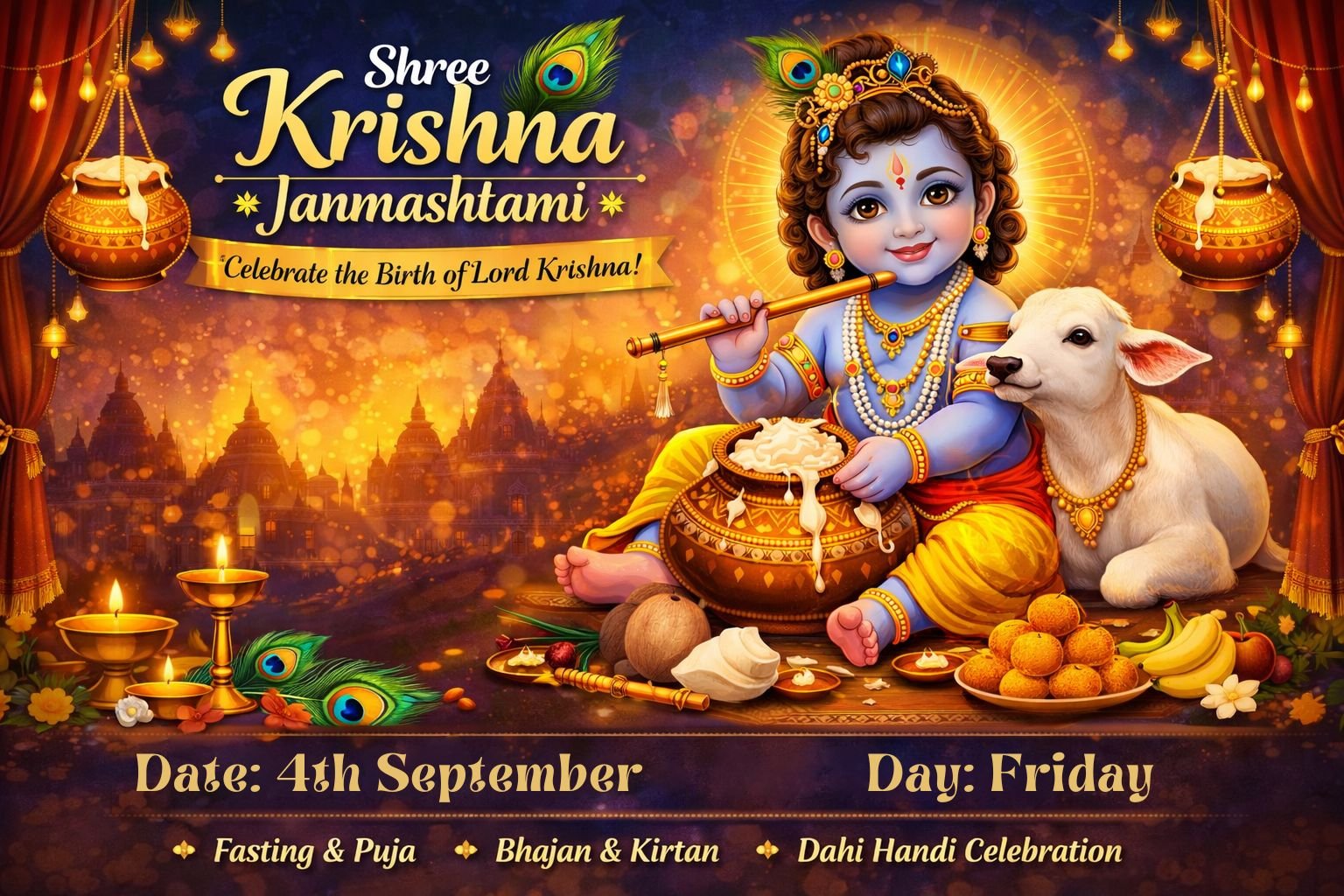
Krishna Janmashtami — also known as Gokulashtami, Sri Krishna Jayanti, or Krishna Janma — is one of the most sacred and joyous Hindu festivals. It celebrates the divine birth of Lord Krishna, the eighth incarnation of Lord Vishnu, who appeared on Earth to destroy evil, protect dharma, and spread love, wisdom, and devotion.
Observed on the eighth day (Ashtami) of Krishna Paksha in the month of Bhadrapada (August–September), Janmashtami is celebrated with fasting, devotional singing, night vigils, temple rituals, and the reenactment of Krishna’s leelas (divine plays).
This 2000+ word blog explores:
- Who is Lord Krishna?
- The divine story of His birth
- Why Janmashtami is celebrated
- Rituals, fasting rules, and traditions
- Dahi Handi celebration
- Cultural and spiritual significance
- Global celebrations
- Teachings of Krishna
- Krishna in the modern world
- How devotion evolves in the age of technology
Let’s begin the divine journey.
🕉 1. Who Is Lord Krishna?
Lord Krishna is one of the most beloved and revered deities in Hinduism. He is:
- The eighth avatar of Vishnu
- The embodiment of love and joy
- The protector of dharma
- The destroyer of evil
- The teacher of the Bhagavad Gita
- The Supreme Consciousness
His life represents:
- Divine love (Rasa Lila)
- Fearless playfulness (Makhan Chor)
- Duty and righteousness (Gita teachings)
- Compassion for all beings
Krishna is worshipped by children, youth, elders, devotees, yogis, and seekers alike.
🕉 2. The Divine Birth of Krishna
The story begins in Mathura, ruled by the tyrant king Kansa. A prophecy warned that Kansa would die at the hands of his sister Devaki’s eighth son. Filled with fear, he imprisoned Devaki and Vasudeva, and killed their first six children.
But destiny cannot be stopped.
The seventh child, Balarama, was miraculously transferred to Rohini’s womb.
The eighth child — Krishna — appeared at midnight in the prison, as lightning illuminated the sky and divine music filled the air.
At the moment of birth:
- The chains of Devaki and Vasudeva fell off
- The prison guards fell into deep sleep
- The prison doors unlocked
- The Yamuna parted to let Vasudeva pass
- Nanda and Yashoda’s newborn daughter was exchanged with Krishna
Krishna’s birth symbolizes:
✨ The victory of divine will over negative forces
✨ The arrival of hope when darkness seems strongest
✨ The protection of dharma
🕉 3. Why Krishna Janmashtami Is Celebrated
Janmashtami is a reminder that:
- Divine takes birth to restore balance
- Evil cannot overpower truth
- God appears when devotees call with pure hearts
It is a celebration of:
- Protection
- Love
- Faith
- Playfulness
- Divine intervention
- Cosmic order
Krishna’s life teaches humanity how to live with joy, balance, knowledge, and compassion.
🕉 4. Rituals & Traditions of Janmashtami
Janmashtami rituals vary across India, but the essence remains the same: devotion, fasting, singing, and celebrating Krishna’s divine birth.
🌙 Fasting (Upavasa)
Devotees observe:
- Full-day fast
- Phalahar (fruit fast)
- Nirjala (no water fast)
The fast is broken at midnight after Krishna’s birth.
🌼 Japa & Kirtan
Devotees chant:
- Hare Krishna Hare Rama
- Govind Bolo Gopal Bolo
- Om Namo Bhagavate Vasudevaya
Bhajans, kirtans, and temple music fill the night air.
🍼 Bal Gopal Abhishekam
Baby Krishna idols are bathed with:
- Milk
- Honey
- Ghee
- Curd
- Sugar
This symbolizes purification and divine blessings.
🎉 Jhulan Utsav
Krishna is placed in a beautifully decorated swing (jhula) and gently rocked, symbolizing love and devotion.
🌸 Midnight Celebration
At exactly 12:00 AM, temples awaken with:
- Conch shells
- Bells
- Aarti
- Shankh dhwani
- Dhunuchi
This marks the moment of Krishna’s divine arrival.
🍯 Makhan Misri Bhog
As the “Makhan Chor,” Krishna is offered:
- Butter
- Misri
- Panchamrit
- Kheer
- Dry fruits
Sweetness represents divine purity.
🕉 5. Dahi Handi: The Celebration of Joy
In Maharashtra and parts of Gujarat, Dahi Handi is celebrated the day after Janmashtami.
Inspired by Krishna’s childhood mischief of stealing butter with his friends, young men form human pyramids to break a clay pot filled with:
- Butter
- Curd
- Milk
- Sweets
It symbolizes:
- Teamwork
- Courage
- Joy
- The youthful spirit of Krishna
🕉 6. Cultural Significance Across India
Krishna is worshipped differently across regions:
🌸 Mathura & Vrindavan
The birthplace of Krishna. Temples like:
- Banke Bihari
- Prem Mandir
- ISKCON Vrindavan
- Dwarkadheesh Temple
host grand celebrations.
🌸 Gujarat (Dwarka)
Krishna ruled Dwarka; massive processions, bhajans, and temple rituals take place.
🌸 Maharashtra
Famous for Dahi Handi celebrations.
🌸 South India
People draw small footprints symbolizing Krishna entering their homes.
🌸 Bengal & Odisha
Devotees celebrate Nandotsav and Radha-Krishna Bhajans.
🕉 7. Spiritual Significance
Janmashtami is not just a festival; it is a spiritual awakening.
Krishna represents:
- Love without conditions
- Joy without ego
- Wisdom without fear
- Strength without cruelty
- Dharma without rigidity
Celebrating Janmashtami helps devotees:
- Purify the mind
- Control desires
- Strengthen devotion
- Connect with the divine
Krishna’s flute symbolizes the call of divine consciousness — inviting you to drop ego and flow with divine love.
🕉 8. Teachings of Krishna
Krishna’s teachings in the Bhagavad Gita are eternal.
Here are a few profound lessons:
✔️ Do your duty without attachment
Karmanye Vadhikaraste…
✔️ The soul is eternal
You are not the body; you are timeless consciousness.
✔️ Desire causes suffering
Inner peace comes when you rise above desires.
✔️ Surrender to the Divine
True freedom arises from surrender, not control.
✔️ Balance is the key to life
Moderation in everything — food, work, sleep, speech.
🕉 9. Krishna in the Modern World
Today, Krishna’s philosophy is more relevant than ever:
- He inspires youth with his confidence
- He guides seekers with his wisdom
- He comforts hearts with his compassion
- He teaches leadership, devotion, and detachment
His life teaches us to live fully, love deeply, and act fearlessly.
🕉 10. Eco-Friendly Janmashtami
Many temples and communities emphasize:
- Natural clay idols
- Organic colors
- Minimal plastic usage
- Traditional decorations
- Biodegradable offerings
This honors Krishna, who loved nature, cows, forests, and rivers.
🕉 11. Conclusion
Krishna Janmashtami is a celebration of divine joy, pure love, and spiritual awakening. It reminds humanity that whenever darkness rises, divine light is born.
Just as Krishna was born at midnight, symbolizing the light that ends darkness, his presence today continues to guide us through life’s challenges.
May Lord Krishna bless you with:
- Love
- Wisdom
- Prosperity
- Peace
- Protection
“Jai Shri Krishna”
“Hare Krishna Hare Rama”